What Is Interactive Fiction? A Guide for Romance Readers
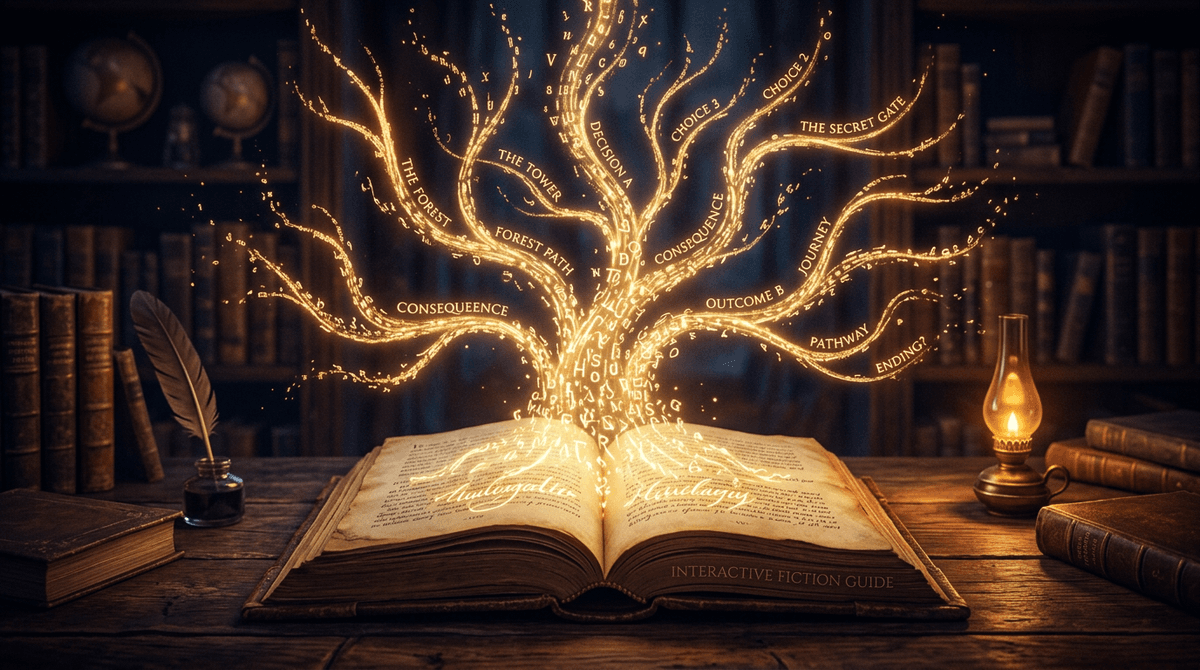
You've finished a book and you're staring at the ceiling thinking: what if she'd chosen differently? What if I could have told him the truth in chapter twelve?
That feeling — the ache of a story that went one way when you wanted it to go another — is exactly why interactive fiction exists.
Interactive Fiction, Explained
Interactive fiction (IF) is a genre where the reader participates in the story. Instead of passively reading a fixed narrative, you make choices that change what happens next. Think of it as the literary cousin of video games — but driven by text, imagination, and narrative craft rather than graphics and reflexes.
The genre has existed since the 1970s (remember Zork?), but it's experiencing a renaissance thanks to AI. Modern interactive fiction doesn't just offer you a menu of pre-written choices. It responds to anything you type, generating story in real time.
How It's Different from Traditional Books
| Traditional Novel | Interactive Fiction | |
|---|---|---|
| Reader role | Observer | Participant |
| Story path | Fixed | Branching / dynamic |
| Rereads | Same story | Different every time |
| Emotional hook | Empathy with protagonist | Being the protagonist |
| Length | Author-defined | Shaped by your choices |
The key difference isn't just mechanical — it's emotional. When you make a choice that leads to heartbreak, you feel it differently because you chose it. When a character falls in love with you, it hits harder because you said the words that made it happen.
Why Romance Readers Especially Love It
Romance is already the most emotionally immersive genre. Readers don't just follow the love interest — they fall in love alongside the protagonist. Interactive fiction takes that one step further:
You don't read the flirtation. You write it.
Imagine you're in a crumbling Victorian manor. The lord of the house appears at the top of the staircase, backlit by candlelight. In a novel, the author decides what the protagonist says. In interactive fiction, you decide. Do you:
- Hold his gaze and say nothing?
- Ask about the locked east wing?
- Tell him you heard the piano at midnight?
Each response sends the story in a completely different direction. The AI remembers what you said, adjusts the character's behavior, and builds a narrative that feels uniquely yours.
Related reading:
- AI Storytelling Is Changing Fiction — What Readers Need to Know
- What Is Dark Romance? The Complete Guide to the Genre
- Dark Romance for Beginners: Where to Start (Without Getting Wrecked)
Where to Start
The OG: Choice of Games / Hosted Games
Text-based games with branching paths. Good for experiencing the format, though the stories are pre-written with fixed choice menus.
Twine / Ink Games
Open-source interactive fiction platforms. More experimental, often literary. Great for shorter experiences.
AI-Powered: Noctveil
This is the new frontier. Noctveil combines the craft of gothic romance writing with AI that responds to anything you type — not just pre-set choices.
The stories are set in dark romance worlds: vampire manors, haunted academies, cursed kingdoms. The AI narrator describes the scene, introduces characters, and sets the mood. Then you type. Your words become part of the story.
What makes Noctveil different from generic AI chatbots:
- Crafted story worlds with detailed settings, character backstories, and narrative arcs
- Literary-quality prose — not chatbot responses, but atmospheric, emotionally rich writing
- Continuity — the AI remembers every conversation, every choice, every relationship beat
- Multiple endings — replay the same story with different choices and discover entirely new paths
The prologue of every story is free. If you've ever finished a dark romance novel and thought "I wish I could have done that differently" — this is for you.
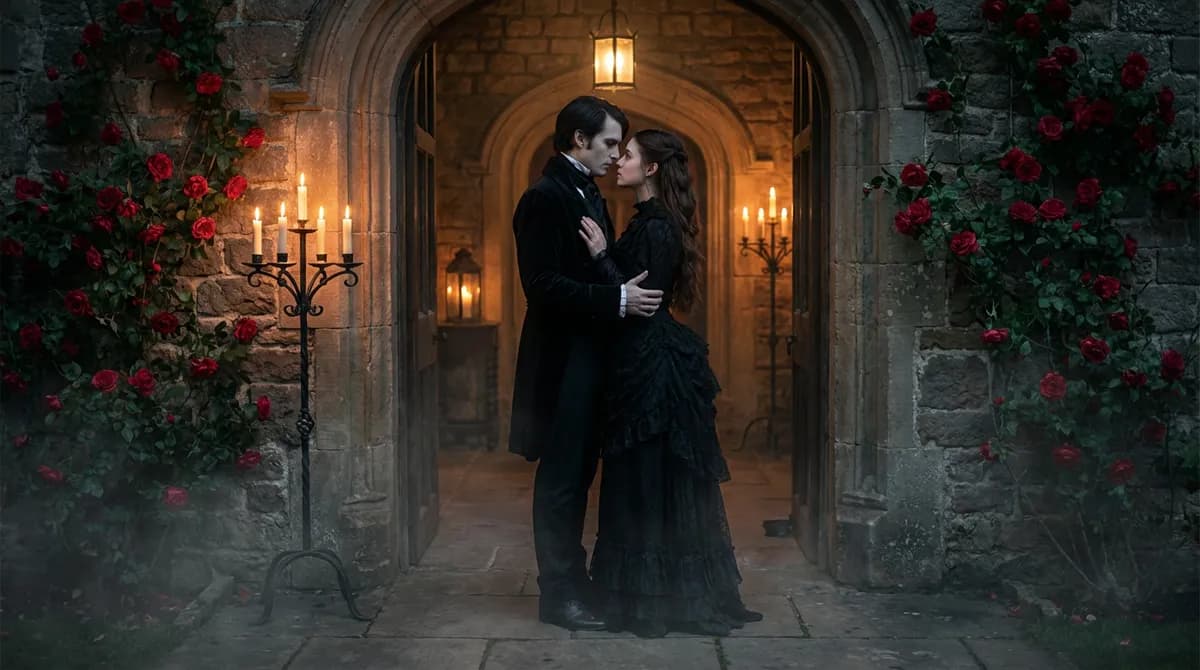
Step into the story
Crimson Manor
You came to govern a silent child in a manor full of locked rooms. Its beautiful master has not aged in centuries, and he wants you to stop asking why.
No account needed · Free